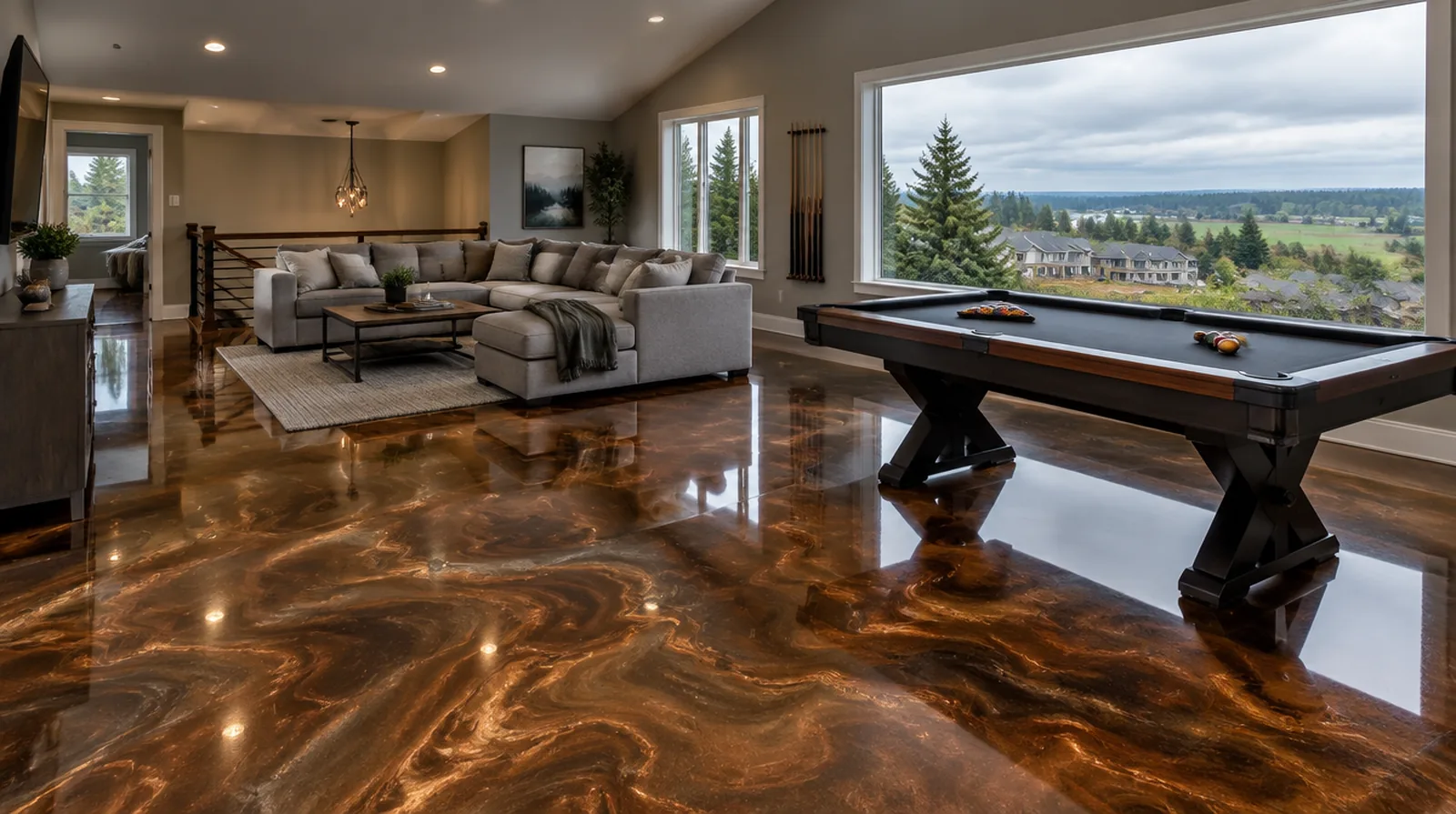
A floor that is one of a kind
Metallic epoxy contains fine pearlescent pigments that move and settle as the resin cures. The installer shapes that movement with rollers, brushes and solvent sprays to create swirls, ripples or a marbled look. No two floors are the same. Light catches the pigments differently as you walk across the room, giving the floor a sense of depth that looks like stone, water or polished metal.
Where it fits
Many newer homes here have a bonus room over the garage or a basement that serves as a media room, gym or game room. Those spaces are perfect for metallic floors. They also look striking in home bars, finished shops that double as hangout spaces, car showrooms, salons, offices and retail stores.
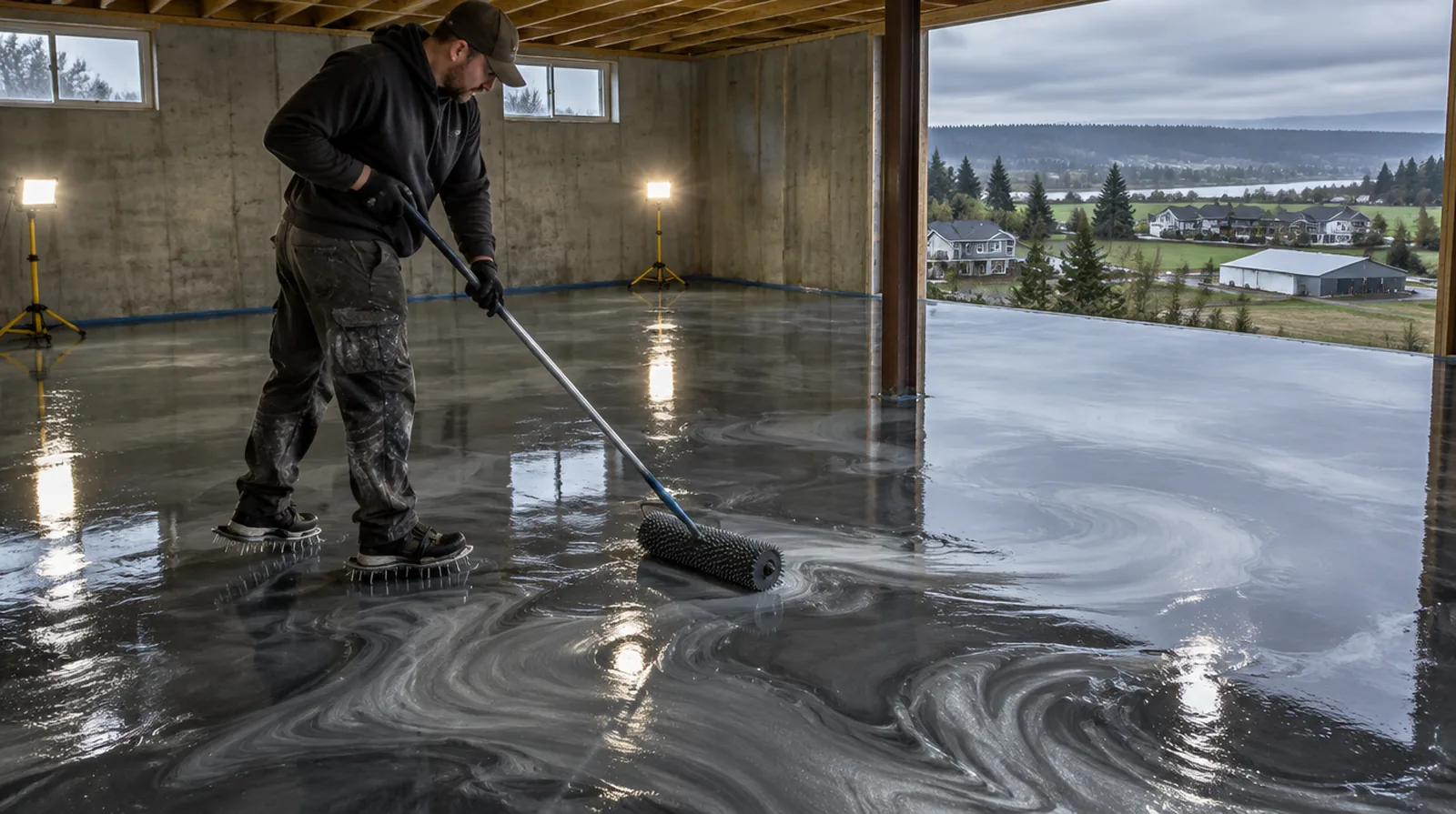
Our process
- Check moisture and the surface. Metallic systems are less forgiving of moisture, so testing matters.
- Grind and repair the concrete until it is flat and clean.
- Prime and lay a tinted base coat.
- Pour and work the metallic layer.
- Add a clear topcoat for wear and scratch resistance.
Choosing colors
Popular choices include charcoal and silver, bronze and copper, deep blue and white pearl. Earthy tones work well in homes with wood trim and warm furniture. Cooler grays suit modern spaces. We show you real samples and photos of past pours, and we will talk honestly about how bold or subtle you want the movement to be.
Slip resistance
Metallic floors are glossy. In living spaces that are mostly dry, this is fine. For areas near entries, sinks or bars, we can add a fine anti-slip additive to the topcoat or recommend a satin finish to improve footing.
Scratches and wear
Like any glossy surface, metallic epoxy can show fine scratches over time. A tough urethane or polyaspartic topcoat greatly reduces this, and felt pads under furniture help. A worn topcoat can be lightly sanded and recoated years later without redoing the whole floor.
Upkeep
Dust mop regularly and damp mop with a neutral cleaner. Avoid harsh chemicals and rough scrubbing pads. Walk-off mats at doors catch grit before it reaches the floor.
Basements and moisture
Below-grade slabs can push moisture up through the concrete, and in a damp climate that is a real risk. Metallic coatings need dry concrete, so we test basement floors carefully. If readings are high, we can use a moisture-barrier primer under the metallic layer or suggest polished concrete instead.
Timeline
Most metallic floors take two to three days because of the extra layers and cure times. Light foot traffic is usually fine after a day, and furniture can return after a few more days.
Is metallic right for you?
If you want a statement floor and like the idea of something truly unique, yes. If you want a floor that hides dirt in a working garage or shop, flake is usually more practical. Many homeowners pair a flake garage with a metallic bonus room, using each where it makes the most sense. We can quote both together and schedule them back to back so the work is done in one visit.
Can metallic go in a garage?
Yes, but it shows dirt and tire marks more than flake. It is best for show garages.
How long does it last?
With a good topcoat and normal care, many years.
Can you match a design I saw online?
We can get close in color and style, but every pour is unique.
Design your floor
Contact us to talk colors and schedule a visit.
to design a metallic epoxy floor.
Call (360) 322-3560 for a free estimate.