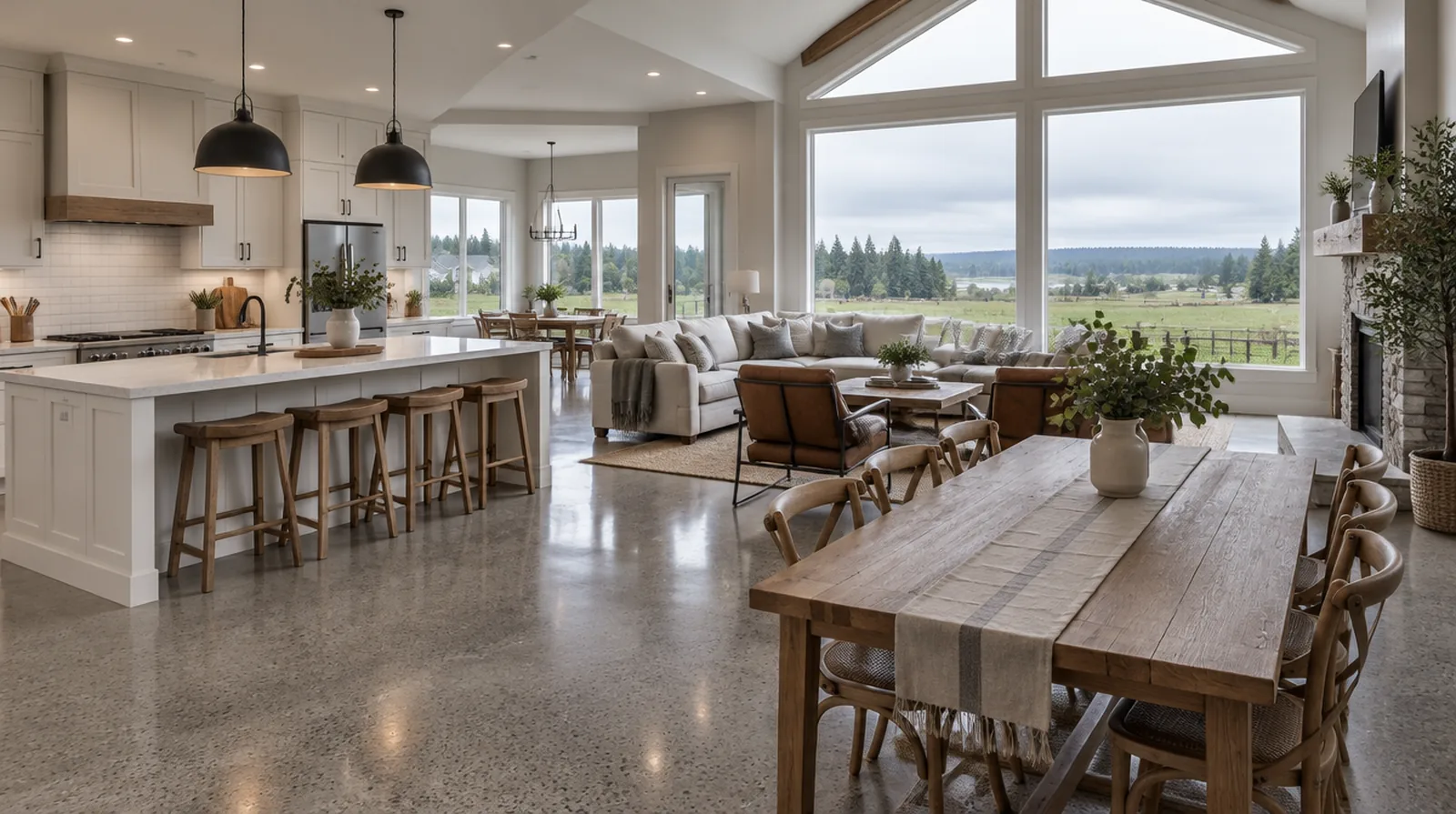
What polished concrete is
Polished concrete is not a coating. We grind the slab with progressively finer diamonds, apply a densifier that hardens the surface, then polish it to the sheen you choose, from matte to high gloss. The finished floor is dense, dust-free and reflective, and it lasts for decades with simple care.
Popular in modern homes
Modern farmhouse and contemporary homes often use polished concrete on main floors, especially with radiant heating. The floor holds warmth, works with wood and white finishes and never needs refinishing like hardwood. It is also a strong choice for basements and shop apartments.
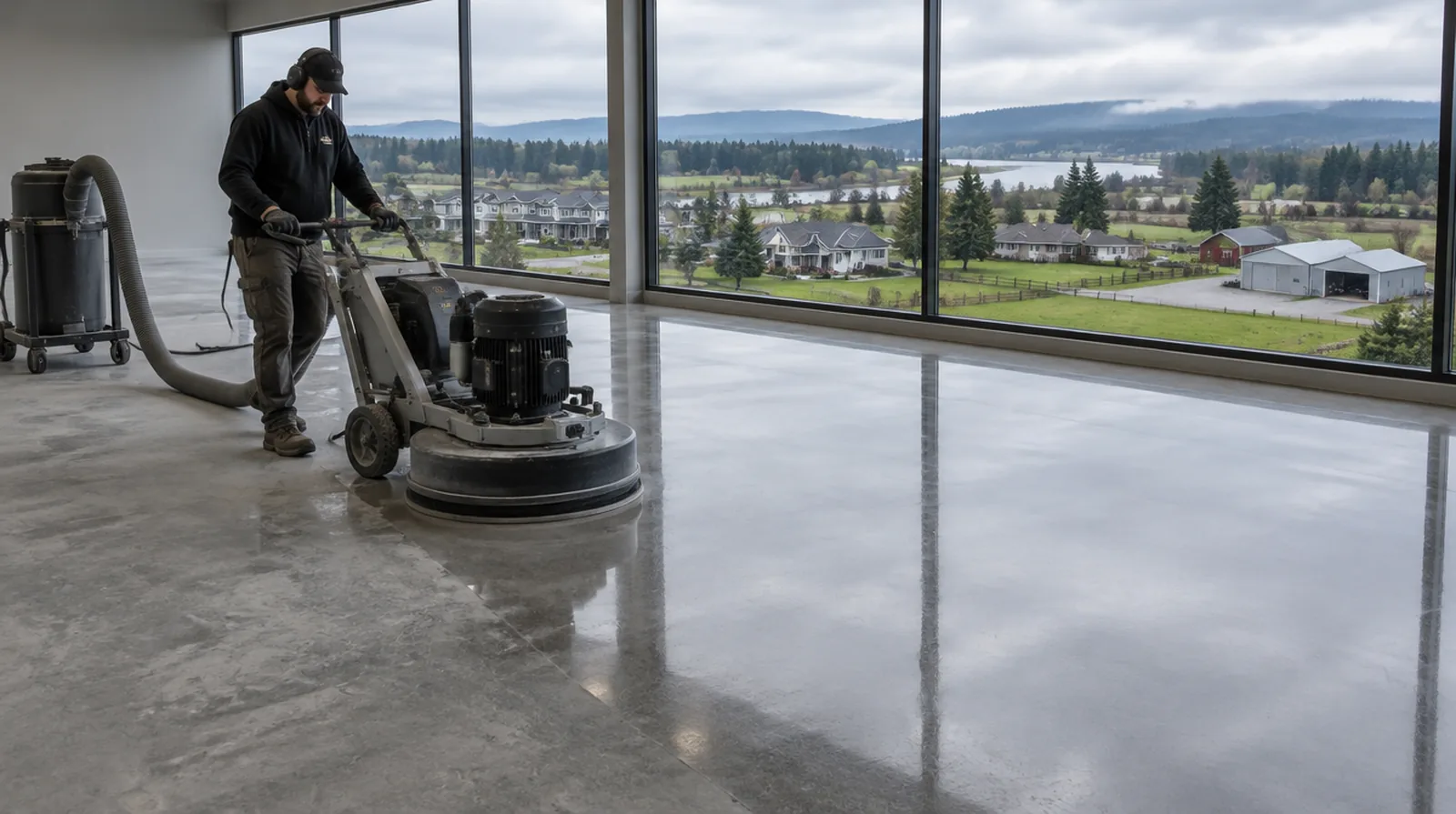
Commercial uses
Retail stores, offices, gyms, churches, warehouses and restaurants choose polished concrete because it handles heavy foot traffic with minimal upkeep. It brightens spaces by reflecting light, which can reduce lighting needs in large buildings.
Choosing the look
- Cream finish: very little aggregate exposure, smooth and uniform.
- Salt and pepper: light exposure of fine aggregate.
- Full aggregate: deeper grind exposing larger stones for a terrazzo-like look.
Sheen levels range from satin to high gloss. Dyes can add warm or cool tones.
Not every slab is ideal
Polishing reveals what is in the concrete: patches, cracks, trowel marks and color variation. Some people love that natural character, and others prefer the uniform look of a coating. We inspect the slab and show you how it is likely to look before you commit.
Moisture-friendly
Because polished concrete is not a film on top of the slab, it does not peel from moisture vapor like a coating can. That makes it a smart option for slabs with higher moisture readings, including some basements.
Our process
- Inspect and test the slab.
- Grind with metal-bond diamonds to the desired exposure.
- Fill cracks and holes.
- Apply densifier.
- Polish with resin diamonds through finer grits.
- Apply guard for stain resistance.
Care
Dust mop daily in busy spaces and damp mop with a pH-neutral cleaner. Clean spills promptly, especially oils and acids. Periodic burnishing restores shine in high traffic areas.
New construction
If you are building a new home or commercial building, talk to us early. Polishing can be planned before walls go up, and good pour and finish practices make for a better result.
Cost and longevity
Polished concrete often costs about the same as a quality coating at the start and less over time, because there is no film to wear through or recoat. Over twenty years, it is one of the lowest cost floors to own.
Shops and warehouses
Large buildings with forklifts, carts and constant foot traffic benefit from polished concrete because there is no coating to wear through. A densified, polished floor resists dusting, which helps keep inventory, equipment and air cleaner. It is also easy to clean with automatic scrubbers. For shops with heavy oil or chemical use, we may recommend a coating in work areas and polished concrete in walkways and storage aisles.
Grind and seal as a budget option
If you like the look of exposed concrete but do not need a full polish, a grind and seal is a lower cost alternative. We grind the surface to reveal the aggregate you want, then apply a clear sealer for protection and sheen. It is a popular choice for basements, studios and shop offices where budget matters but you still want a finished, modern floor.
Is polished concrete slippery?
Clean, dry polished concrete has good traction. Wet areas need care, as with any smooth floor.
Can my garage be polished?
It can, but coatings resist oil stains better in garages.
Does it work with radiant heat?
Very well.
Get a polishing quote
Contact us to see samples and schedule an assessment.
to get a polished concrete quote.
Call (360) 322-3560 for a free estimate.