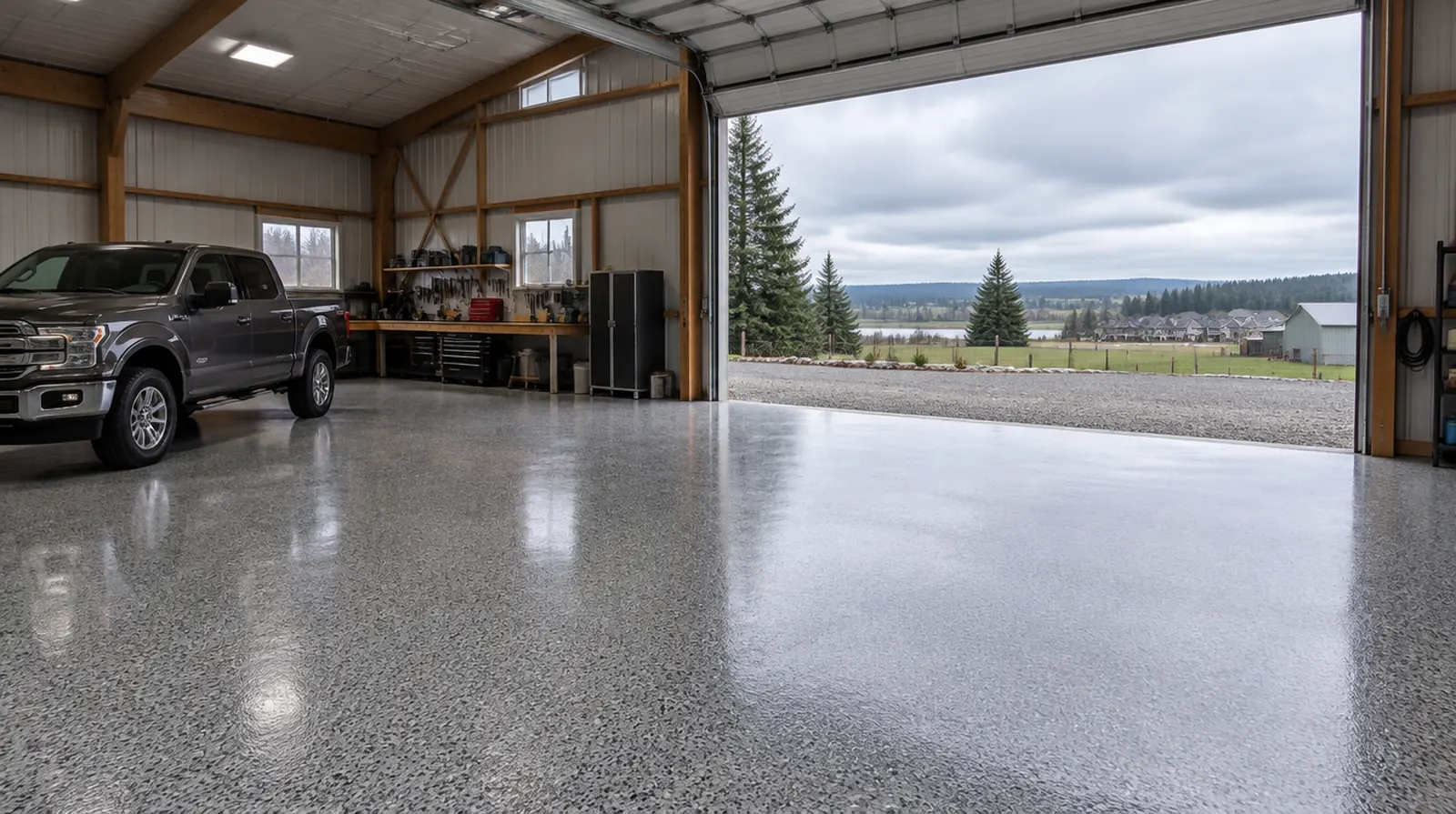
What polyaspartic is
Polyaspartic is a type of polyurea coating that cures much faster than standard epoxy. It can be used as a full system or as a topcoat over an epoxy base. It is known for three things: speed, UV stability and toughness. For busy households, working shops and businesses that cannot shut down for days, it is often the best choice.
Why speed matters
A typical epoxy floor needs a couple of days before vehicles can return. Many polyaspartic systems allow foot traffic in a few hours and vehicles in about a day. For a family with one garage and two cars or a shop owner who needs equipment back inside, that difference is real. It also means fewer days with tools and storage pushed into the yard under gray skies.
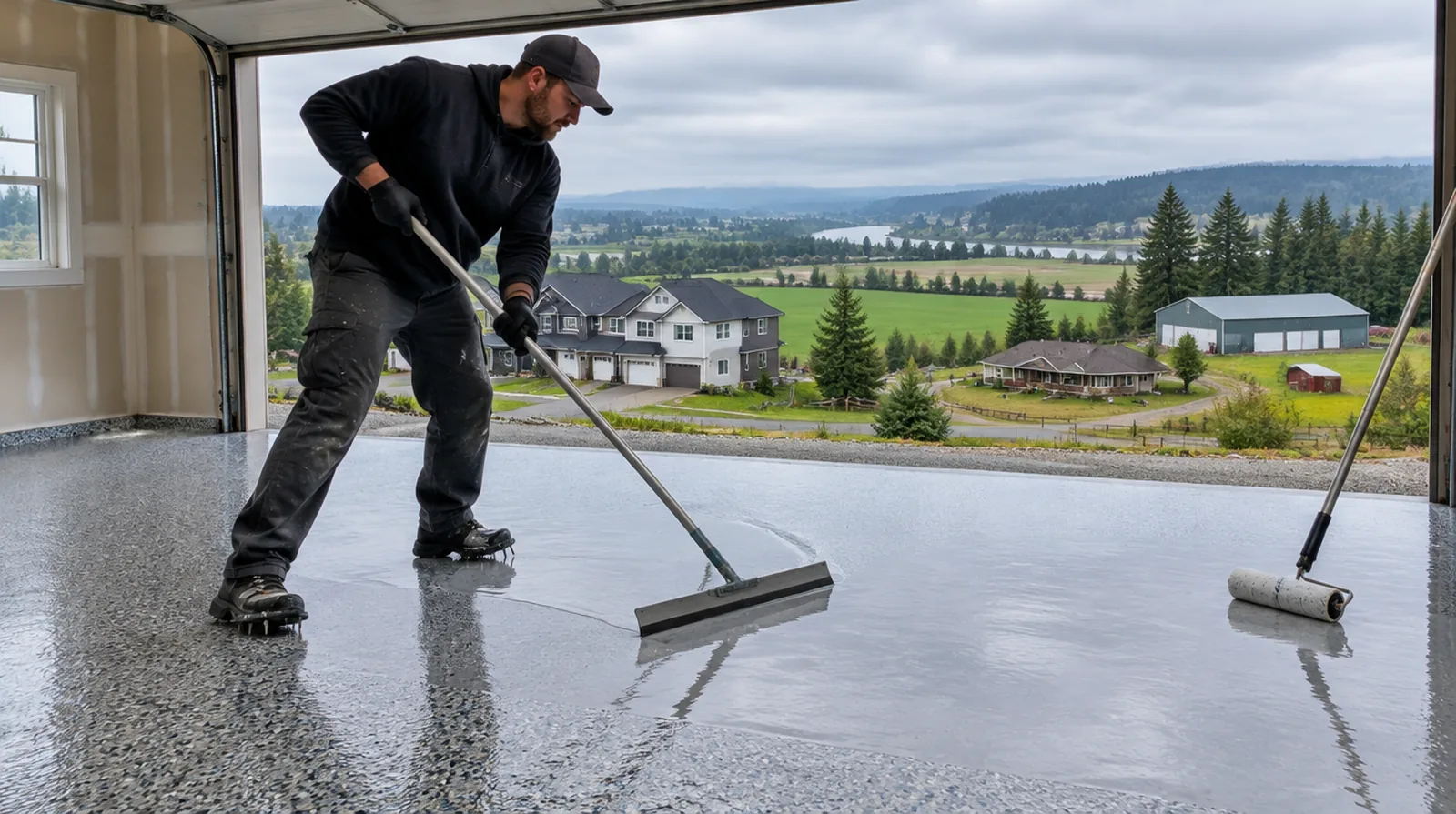
UV stability
Standard epoxy can yellow when exposed to sunlight. Big shop doors, garage doors that stay open on summer days and buildings with skylights all let UV reach the floor. Polyaspartic does not yellow, so colors stay true near openings. That makes it a strong choice for detached shops and garages where the door is open for hours.
Temperature flexibility
Polyaspartic can be installed in a wider temperature range than many epoxies. That helps in cool, damp months when unheated shops and garages stay chilly. We still check slab temperature and dew point before every install so the coating cures correctly.
Durability
Polyaspartic topcoats resist abrasion, chemicals and hot tire pickup very well. They are flexible enough to handle the slight movement of concrete over seasons without cracking, and they hold up to rolling toolboxes and equipment.
Our system
- Moisture test and grind.
- Repair cracks and pits.
- Apply base coat, epoxy or polyaspartic depending on conditions.
- Broadcast flake if desired.
- Polyaspartic topcoat.
Professional install only
Fast cure time is a benefit for you but a challenge for installers. Polyaspartic has a short working time, so it has to be mixed and spread quickly and evenly. This is not a DIY product. Our crews work in teams to keep a wet edge and avoid lap marks.
Cost
Polyaspartic usually costs a bit more than standard epoxy, but many customers find the faster return to service and UV stability worth it. Your quote can include both options side by side.
Care
Sweep, rinse and squeegee as needed. Use mild cleaners for oil or chemical spills. Avoid dragging sharp steel across the floor.
Best uses
Detached shops with big doors, garages that see a lot of daylight, auto service bays, showrooms and businesses that need minimal downtime are all strong candidates. For a bonus room or basement with no sunlight and no rush, standard epoxy may be enough, and we will tell you so if it saves money without giving up performance.
Flake and polyaspartic together
Our most requested shop and garage system combines a full flake broadcast with a polyaspartic topcoat. The flake hides dirt and adds grip, and the polyaspartic protects it from sun, tires and chemicals while getting the floor back in service quickly. It is a practical, long-lasting choice for working buildings and busy family garages.
Is polyaspartic better than epoxy?
It is faster and UV stable. Epoxy is a great base coat. Many of our systems combine both.
Can it go over an old coating?
Only after the old coating is evaluated and usually removed by grinding.
How fast can I park?
Often within about a day, depending on temperature.
Get a fast-cure quote
Contact us to compare epoxy and polyaspartic.
to get a polyaspartic coating quote.
Call (360) 322-3560 for a free estimate.